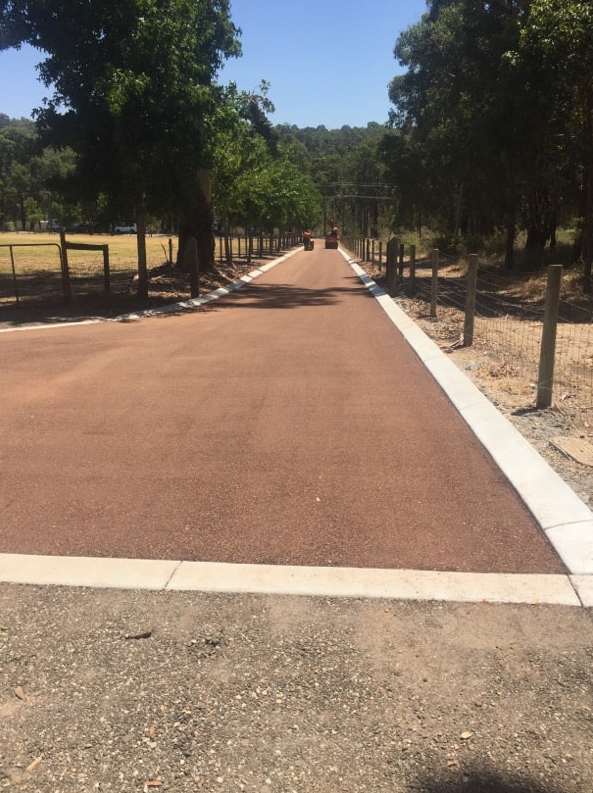
An ageing asphalt surface does not automatically need to be completely removed and reconstructed. In many cases, the visible wearing layer may be deteriorating while the pavement structure underneath remains sufficiently stable. When this is the case, asphalt resurfacing can restore a consistent trafficable surface while retaining suitable parts of the existing pavement.
For property owners and businesses in Bannockburn, VIC, the important question is not simply how old the asphalt looks, but how well the complete pavement is still performing. Cracking, potholes, rutting, drainage and previous repairs all provide useful information when deciding whether resurfacing is appropriate or whether deeper reconstruction is required.
What Is Asphalt Resurfacing?
Asphalt resurfacing involves renewing the upper portion of an existing pavement rather than rebuilding the entire structure from the ground up.
Before the new asphalt is installed, the existing surface is assessed and prepared. Localised failures may need to be removed and repaired, cracks and damaged areas addressed, and levels corrected where appropriate. A new asphalt layer can then be installed over a suitable prepared pavement.
The purpose is not simply to cover old asphalt. A successful resurfacing project uses the existing pavement as part of the renewed structure, which means that pavement must still provide reliable support.
Resurfacing and Reconstruction Solve Different Problems
The difference between resurfacing and reconstruction largely comes down to where the deterioration is occurring.
Resurfacing is generally intended to address an ageing or deteriorated upper pavement where the supporting structure remains serviceable.
Reconstruction becomes more appropriate when the pavement underneath has substantially failed. This can involve removing deteriorated materials, rebuilding the supporting layers and then installing a new surface.
Choosing correctly between these approaches is important because a new asphalt layer cannot permanently correct significant instability beneath it.
Signs Your Existing Asphalt May Be Suitable for Resurfacing
A pavement may be a good candidate for resurfacing when deterioration is primarily affecting the surface rather than the underlying structure.
Typical indicators can include:
- General surface weathering
- Loss of surface consistency
- Moderate cracking that can be properly treated
- Isolated potholes that can be repaired beforehand
- Previous patches where the surrounding pavement remains stable
- Surface wear across frequently travelled areas
- A generally firm pavement without extensive settlement
These signs still require professional assessment. The overall condition and cause of the deterioration matter more than any individual defect.
Widespread Surface Wear Does Not Always Mean Structural Failure
An older asphalt pavement can look tired while still retaining a useful foundation.
Years of vehicle movements and environmental exposure gradually affect the upper surface. Aggregate may become more exposed, the pavement may lose its uniform appearance, and minor defects can become increasingly noticeable.
If the base remains stable, resurfacing can provide a renewed wearing surface without unnecessarily disturbing pavement that is still performing effectively.
This is one of the main reasons assessment should come before deciding to rebuild.
Cracks Need to Be Evaluated Before Resurfacing
Cracking is common in ageing asphalt, but not all cracks have the same significance.
Limited surface cracking may be manageable through appropriate preparation and repair. Extensive interconnected cracking, recurring cracks or cracks accompanied by pavement movement can indicate deeper problems.
Particular attention should be given to cracks that:
- Continue widening
- Reappear after previous repairs
- Form extensive interconnected patterns
- Occur alongside depressions
- Have crumbling or displaced edges
- Extend through visibly unstable sections
Applying new asphalt over significant unresolved movement can allow defects to eventually affect the resurfaced pavement.
Existing Potholes Must Be Properly Repaired
A pavement containing several potholes is not automatically unsuitable for resurfacing.
The important issue is why those potholes formed.
Where potholes are isolated and the surrounding pavement remains structurally sound, damaged material can often be removed and the sections repaired before resurfacing takes place.
If potholes continually return throughout the pavement, however, the problem may involve widespread base instability or moisture-related deterioration. In this situation, simply repairing the holes and covering the surface may not provide the required result.
Rutting Can Reveal What Is Happening Underneath
Wheel ruts deserve careful attention when assessing an existing asphalt surface.
Minor wear within regular traffic paths may affect only the upper pavement. Deep or widespread rutting can indicate deformation within the supporting layers.
A resurfacing layer placed over an unstable rut may eventually deform in a similar way because the underlying cause remains.
Determining the depth and cause of rutting is therefore important before deciding whether resurfacing or reconstruction is appropriate.
Depressions and Settlement Can Change the Decision
An asphalt surface that is noticeably sinking in particular areas may have problems below the wearing layer.
Settlement can occur where supporting materials have lost stability or where sections of pavement are no longer providing uniform support.
It can also create low points where rainfall collects.
Where settlement is minor and localised, corrective work may allow the wider pavement to be resurfaced. Where movement is substantial or widespread, reconstruction of affected sections may be necessary.
Drainage Should Be Considered Before New Asphalt Is Installed
Water management has a major influence on pavement performance.
If an existing asphalt area regularly holds water, directing a new surface over the top without investigating the reason can leave an important problem unresolved.
Poor drainage can contribute to moisture entering cracks and edges, weakening supporting pavement and accelerating pothole development.
Before resurfacing, consideration should be given to:
- Existing surface falls
- Low areas where water collects
- Drainage around pavement edges
- Depressions and wheel ruts
- Areas where runoff crosses damaged asphalt
Correct pavement preparation should help create conditions that allow water to move away effectively.
Previous Repairs Can Provide Useful Clues
The history of an asphalt surface can help determine whether resurfacing is appropriate.
A small number of stable repairs is not necessarily a concern. In fact, timely patching can help preserve an otherwise sound pavement.
A different picture emerges when a surface contains numerous patches that are failing, sinking or cracking around their boundaries.
Repeated deterioration across multiple repaired sections can indicate that problems are no longer isolated. In these circumstances, the supporting pavement should be investigated carefully before further surfacing work is undertaken.
Edge Condition Matters Too
The central trafficable area is not the only part of the pavement that should be inspected.
Asphalt edges can deteriorate through insufficient support, erosion or repeated vehicle loading close to the boundary. Once edges begin breaking away, damage can gradually progress further into the pavement.
Localised edge problems can often be corrected as part of preparation. Extensive edge failure may require more substantial rebuilding and improved support before resurfacing.
Restoring the surface without stabilising weak boundaries can leave the renewed pavement vulnerable.
When Is Reconstruction More Appropriate?
Reconstruction should be considered when deterioration extends significantly into the pavement structure.
Warning signs can include:
- Severe interconnected cracking
- Deep or widespread rutting
- Major settlement
- Extensive pavement movement
- Numerous recurring potholes
- Widespread base instability
- Repeated failure of previous repairs
- Significant deformation across multiple areas
These symptoms can indicate that the existing pavement no longer provides a dependable foundation for resurfacing.
Reconstruction allows unsuitable materials to be addressed and the pavement structure restored before the new asphalt surface is installed.
Does the Whole Area Need Rebuilding if One Section Has Failed?
Not necessarily.
Some asphalt pavements contain individual areas of deeper failure while the majority of the pavement remains structurally serviceable.
Where appropriate, these sections can be reconstructed locally before the wider area is resurfaced. This allows suitable existing pavement to be retained while genuine structural weaknesses receive the deeper treatment they require.
The decision should be based on the extent and distribution of deterioration rather than assuming that one failed section means the entire pavement needs rebuilding.
Why Preparation Determines the Quality of Resurfacing
Resurfacing should be treated as a pavement restoration process rather than simply installing asphalt over an old surface.
Preparation may involve repairing potholes, removing unstable sections, correcting localised depressions, addressing cracks, improving edges and ensuring the existing pavement is suitable to receive the new asphalt.
The new surface ultimately depends on what is supporting it.
Careful preparation helps create a consistent foundation and reduces the risk of existing defects quickly becoming visible through the resurfaced pavement.
Resurfacing Can Extend the Usefulness of a Sound Pavement
When undertaken at the right stage, resurfacing can preserve the structural value already present in an existing asphalt pavement.
Waiting until extensive base failure has developed can reduce the opportunity to retain those existing materials. Once deterioration progresses into widespread settlement, severe cracking and significant deformation, more substantial reconstruction may become necessary.
Assessing an ageing surface before it reaches that point can provide more options for restoration.
Professional Assessment Is the Best Starting Point
The distinction between surface deterioration and structural failure is not always obvious.
Two asphalt areas may appear similarly worn but have very different conditions underneath. One may have a stable base and be well suited to resurfacing, while another may be moving because its supporting pavement has deteriorated.
A professional assessment can consider:
- Surface condition
- Crack patterns
- Potholes and previous repairs
- Rutting and deformation
- Pavement stability
- Drainage performance
- Edge condition
- Intended vehicle use
This allows the recommended treatment to reflect the actual condition of the pavement rather than relying on appearance alone.
Conclusion
Existing asphalt can often be resurfaced instead of completely rebuilt when deterioration is concentrated in the upper surface and the supporting pavement remains stable. Surface wear, manageable cracking and isolated defects can frequently be corrected through proper preparation before a new asphalt layer is installed.
Reconstruction becomes more appropriate when there is substantial base instability, severe rutting, widespread structural cracking, significant settlement or recurring failures throughout the pavement. In some cases, only the failed sections need deeper reconstruction before the remaining area can be resurfaced.
Bannockburn Road Tech provides professional asphalt and bitumen surfacing services throughout Bannockburn, VIC. If your existing asphalt is showing signs of age or deterioration, our team can assess the pavement and determine whether resurfacing, localised repairs or more substantial reconstruction is the appropriate approach for dependable long-term performance.
Call us on: 03 4159 2883
Click here to find out more about Bannockburn Road Tech
Click here to complete our contact form and see how we can help with your driveway needs.